- Fantastic performance
- Long-lasting battery
- Solid camera
- Dated 60Hz display
- Single rear-facing camera
- More expensive than the iPhone SE
The iPhone 16e is a good iPhone, although not a particularly exciting one. While recent Apple devices like the new Mac mini are impressive enough to sway Windows users to change their loyalties, the iPhone 16e doesn’t have that same energy. It won’t have Android users flocking to switch.
This isn’t because of any fatal flaw or omission. It’s just one of those situations where the math isn't mathing. You cut a few corners here and there to bring the price down and make a more affordable product, but you end up with one that lacks an identity. The iPhone 16e feels built to hit a price point rather than to surprise and delight.
iPhone 16e 128GB Plans
|
#1
|
Visible

$25 Visible Plan
$25.00/mo
Taxes & Fees included
+ $599 Upfront
|
|
#2
|
Boost Mobile

Unlimited Plan
$10.00/mo
with AutoPay
+ $599.99 Upfront
|
|
#3
|
Wing

1GB Data Plan
$17.00/mo
+ $749.99 Upfront
|
|
#4
|
Tello

Unlimited Text, Talk, and Data Plan
$25.00/mo
+ $499 Upfront
|
|
#5
|
Spectrum Mobile

By the Gig
$20.00/mo
+ $619.99 Upfront
|
|
#6
|
AT&T

Prepaid Unlimited Talk, Text, and Data Plan
$25.00
Per 1 Month Refill
+ $304.98 Upfront
|
|
#7
|
Total Wireless (previously Total by Verizon)

Total STARTER Plan
$35.00/mo
with AutoPay ($40 for the first month)
+ $599.99 Upfront
|
|
#8
|
T-Mobile

$35 Connect by TMO 12GB
$35.00
Per 1 Month Refill
Taxes & Fees NOT included
+ $657.99 Upfront
|
|
#9
|
Straight Talk

Platinum Unlimited Data Plan
$60.00/mo
+ $199 Upfront
|
|
#10
|
XFINITY Mobile

Mobile Select Plan
$0.00/mo
(for the first year of service) <br>Regular rate of $30/mo. thereafter
+ $499.99 Upfront
|
A little old, a little new

Image: Alex Choros
The iPhone 16e technically replaces the 2022 iPhone SE as the most affordable iPhone in Apple’s family. Despite this, I think a better comparison is the iPhone XR from 2018. It was a cheaper flagship, rather than a “budget” device like the iPhone SE. For a more modern reference, it’s similar to how Samsung sells an “FE” model of its Galaxy S series flagships that is cheaper, but not exactly cheap.
This isn’t important because the iPhone 16e starts at $599, while the last iPhone SE was priced at $429. $170 isn’t an insignificant difference, but while the iPhone 16e is more expensive, it’s a better value.
Some may have loved the classic iPhone SE design (Home button and all), but even in 2022, it was dated. Using a tiny 4.7-inch display surrounded by a bezel felt limiting. Reading long-form articles, watching videos, and even just trying to look up restaurants made me long for a larger screen.
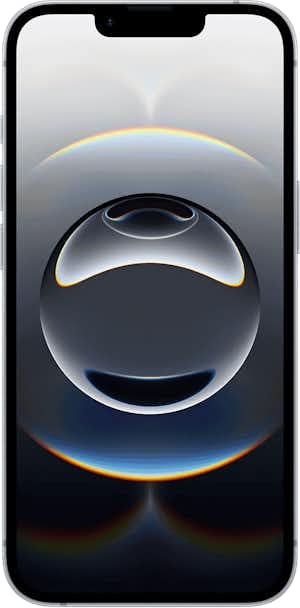
This time around, Apple is effectively recycling the iPhone 14 design. It has a larger 6.1-inch screen that, while still on the smaller side for phones, is more functional. Touch ID has been replaced by Face ID, but it’s housed in a notch rather than the Dynamic Island introduced on the iPhone 14 Pro. It may not be Apple’s latest and greatest, but it’s a lot more modern.
But despite these welcome changes, the iPhone 16e doesn’t quite fit into the iPhone 16 family from a design perspective. The bezels surrounding the display are larger, and it’s missing the softer contoured frame from the latest models. These are hardly dealbreakers, but like I said, little things add up.

Image: Alex Choros
Another cut from the feature lineup is MagSafe. Apple’s handsets have supported MagSafe accessories since the iPhone 12, and it's spawned a fun little ecosystem of knick-knacks and doodads that can play on your phone. There are the obvious MagSafe-compatible wireless charging solutions and stands that you won't be able to use, but there are also things like MagSafe car mounts. I tend not to use wireless charging, but I love having a MagSafe car mount. It’s one less step to think about when you get in the car, and that’s great.
It’s weird that Apple would axe such a unique feature to shave off a few dollars in manufacturing costs. There’s a whole cottage industry of adapters that are designed to let you use MagSafe products with Android phones. It’s a much-loved Apple exclusive that, for some reason, is missing.
Solid foundations

Image: Alex Choros
When we get into the more traditional hardware aspects, a lot of what’s on offer is fantastic.
You’ve got a similar A18 processor to that found in the iPhone 16 and iPhone 16 Plus. It has one less graphic core, but is otherwise identical. There’s very little to complain about with the performance. The standard iPhone 16 and iPhone 16 Pro will be able to achieve better frame rates with demanding tasks like gaming, but even AAA titles like Death Stranding and Assassin’s Creed are still perfectly playable on the iPhone 16e.
Battery life is also excellent. Expect up to eight hours of screen time per charge when connected to a 5G mobile network. That’s an hour more than we were getting on the standard iPhone 16, and similar to what we got on the iPhone 16 Pro Max. With moderate use, expect as much as two days of battery life per charge. It’s a seriously great battery.
Part of the reason for the better battery life is a larger physical battery. The iPhone 16e battery is around 400mAh larger than the one found in the iPhone 16. In addition, the iPhone 16e is also Apple’s first device to use an in-house modem, which the company says is more efficient than the one found in the rest of the iPhone 16 family. Despite the change, I didn’t experience meaningful differences in cellular connectivity when testing the iPhone 16e.
The iPhone 16e continues the iPhone SE tradition of having just a single camera, but thankfully, it’s pretty good. The sole rear-facing camera is a 48MP lens that’s similar to what you’ll find in the standard iPhone 16. In good lighting, you won’t be able to tell the difference between photos taken by the iPhone 16e and the iPhone 16. In lower light, the smaller pixel size makes a bigger difference. Nighttime shots from the iPhone 16e are noticeably grainier and, in some cases, less detailed. You may not always notice this unless you’re pixel-peeping or looking on a larger display, but it’s still worth keeping in mind.
The lack of secondary lenses is unusual for a phone this expensive, but it also means less versatility. While you can do what’s effectively 2x optical zoom, there are no options for ultra-wide photography. This means you also can’t take macro shots. Another little wrinkle is that the lack of a second lens means a worse Portrait Mode, as the phone isn’t able to estimate depth as accurately. I also found that the iPhone 16e took a longer time to actually recognize and lock onto my subject when taking Portrait Mode photos.
Apple iPhone 16e camera samples
Check out these camera samples taken on the iPhone 16e. Click or tap on any photo to see a larger version.


One other missing feature is the upgraded photographic styles introduced on the rest of the iPhone 16 family. These are filter-like adjustments that occur before you shoot, giving you much more control over the vibe of your photo. You can personalize your images to an insane degree, and in a sense, it gives users a way to address criticisms like iPhone photos sometimes looking too flat. Given this is software, it doesn’t feel like the kind of thing that should be missing on the iPhone 16e.
The one actual hardware disappointment is the display. While the panel itself is lovely—it has bright colors, deep blacks, and great viewability—the refresh rate issue is becoming embarrassing. Like the standard iPhone 16, the iPhone 16e has a 60Hz refresh rate. Faster refresh rates have become the standard across the phone industry, and even budget Android phones starting at $300 consistently include this feature.
Displays with a higher refresh rate make all motion on a phone look smoother. After using phones with high refresh rates for years now, the 60Hz screen on the iPhone 16e seems laggy to my eyes. Sure, this won’t be an issue for everyone, especially if you’re upgrading from an older iPhone, but the absence means Apple isn’t keeping pace with what the competition has at this price point.
Of course, there are a few unique features Apple has extended to the iPhone 16e. It gets features like emergency satellite connectivity and car crash detection. These are great safety features and certainly welcome, but I don’t know if you’d call them selling points for the average customer.
The iPhone 16e also has an Action button instead of a physical mute switch. By default, the action button toggles the phone between silent and loud, but it can be customized. Your out-of-the-box options are pretty standard tasks, like turning on the flashlight or opening the Translate app. If you’re a bit more adventurous and familiar with Apple’s shortcut system, you can use the Action button to pretty much do anything.
Lastly, the iPhone 16e naturally supports Apple Intelligence, but it’s too early to call that a selling point. And as I said in my Galaxy S25 Ultra review, if everyone is doing AI, it becomes par for the course rather than a feature you need to buy a certain device to get.
Apple iPhone 16e: Final thoughts

The iPhone 16e is a significantly better entry-level iPhone than the iPhone SE, and it’s easy to recommend if you're looking for a cheaper iPhone. There are fewer compromises present than in the iPhone SE, making the 16e a solid option for anyone looking to upgrade.
While I would have liked a higher refresh rate on the screen (and a few other bells and whistles like MagSafe and a contoured frame), the iPhone 16e doesn’t have any red flags. The display is still nice, the processor is blazing fast, the battery is excellent, and the camera is only a small step below what you’d get from the standard iPhone 16.
This is all great, but it doesn’t stop me from believing Apple could have done more. When you look at the latest Macs, the entry-level models are genuinely exciting. The Mac mini is an engineering marvel and a bargain; the latest MacBook Pro’s cheapest configuration is Apple’s best baseline to date; and the brand-new MacBook Air not only got better, it got cheaper.
Of course, Apple has to compete harder in the PC market. Windows machines still make up the majority of devices sold, so there’s more of an incentive to win. When it comes to phones, most of us have picked our sides, and we’re pretty rigid about it. If you want an iPhone, an Android simply won’t do, and vice versa.
But given how long pricing has been a barrier to entry, it’s easy to imagine the iPhone 16e could have been in a fresh volley in the phone wars. If it were even $150 cheaper or had just a little more to offer, it would have landed with the same kind of bang as the latest Macs.
As it stands, the new iPhone 16e is fine. It fits the brief, but it won’t change hearts and minds.
| iPhone 16e | iPhone 15 | iPhone 16 | |
|---|---|---|---|
| Display | 6.1-inch OLED | 6.1-inch OLED | 6.1-inch OLED |
| Resolution | Super Retina XDR | Super Retina XDR | Super Retina XDR |
| Refresh Rate | 60Hz | 60Hz | 60Hz |
| Rear Cameras | 48MP | 48MP + 12MP | 48MP + 12MP |
| Front Camera | 12MP | 12MP | 12MP |
| Processor | A18 | A16 | A18 |
| Storage | 128GB - 512GB | 128GB - 512GB | 128GB - 512GB |
| Water-Resistance | IP68 | IP68 | IP68
|
| 5G | Sub 6 | Sub 6 | Sub 6 |
| Protection | Ceramic Shield | Ceramic Shield | Ceramic Shield 2 |
| Price | From $599 | From $1,249 | From $1,399 |
Alex Choros

Find a better phone plan
Thousands of cell phone plans unpacked. All the facts. No surprises.



.png?w=280&h=280&usm=20&usmrad=0.8&fit=crop "Best Cell Phone Deals for July 2026: Get the New iPhone 17 for Free")