I’ve been an AT&T customer for over 15 years. When I got my first cell phone in high school, it was on my parents’ family plan. Like many Millennials, convenience has kept me there since. Recently, though, I’ve been considering leaving the plan in search of one that makes more sense for my budget and needs. I spent a month testing my plan like I was a new customer and compared it to reviews of Visible and Mint Mobile, all so I could figure out whether I should stick with AT&T or find another carrier.
Based on my testing, I plan on leaving AT&T. I recommend that customers looking for cheaper phone plans and mobile hotspot data look into more affordable options from MVNOs rather than sticking with the bloated and overpriced plans from big carriers like AT&T.
Let’s dive into my review of AT&T's unlimited plans to see if they're the right choice for you.
Why you can trust WhistleOut
.svg)
15+
years of mobile industry experience

900+
published wireless guides

35+
firsthand carrier reviews
We've been around since the birth of the iPhone. Along the way, we've learned how to spot the best deals for your wallet (and your sanity). We spend our days researching informative guides and writing insightful reviews on every kind of wireless plan, distinguishing what matters from what doesn't. We played around with these plans before recommending them, ensuring they're worth your hard-earned money.
Want to know more? Check out how we review every cell phone plan we rank.
How I tested AT&T

I’ve been an AT&T customer for over 15 years and spent one month intentionally testing its service to thoroughly evaluate its performance in everyday scenarios.
The features I tested included the following:
- Sending texts and photo messages in varying locations, including both urban and rural areas
- Making phone and video calls (Zoom, Google Meet, and FaceTime) in various locations, including both urban and rural areas
- Streaming music (Spotify) in my car from my phone
- Watching streaming video (Netflix and YouTube) on my phone
- Playing several video games, including PUBG Mobile and Super Mario Run
- Downloading cloud-based files to my phone
- Using the mobile hotspot for 2 hours in four different locations
- Interacting with AT&T’s customer service via phone and online chat
- Managing my plan via both the myAT&T app and the website
The bottom line
Overall, AT&T’s service is reliable, and all of my plan features work as advertised: Its data speeds are fast, especially in urban areas with 5G. In my testing, getting an actual human from customer service on the phone was difficult, but when I finally did, they were kind and helpful. Still, despite the strengths of AT&T’s service, its limited hotspot allowance and high monthly payments no longer make sense for my situation or my wallet.
AT&T's plans and pricing
AT&T offers several plans, including postpaid, prepaid, family plan, and 5G options. AT&T’s most popular plans are their unlimited data options: the Value 2.0, Extra 2.0, and Premium 2.0.
Each of these plans offers unlimited data, though two (the Value 2.0 and Extra 2.0) have limits on how much full-speed data you get before slowdowns.
AT&T unlimited plan options
| Plan | Full-speed data | Mobile hotspot | Price | Shop this plan |
|---|---|---|---|---|
| Value 2.0 | 5GB, then slowed | 3GB | $50/month | VIEW AT AT&T |
| Extra 2.0 | 100GB, then slowed | 50GB | $70/month | VIEW AT AT&T |
| Premium 2.0 | Unlimited | 100GB | $90/month |
VIEW AT AT&T |
I have the Unlimited Starter SL plan, which I studied and tested for this review. AT&T recently discontinued this plan, but it included unlimited talk, text, data, and 5GB mobile hotspot. The plan is comparable to the new Value 2.0 plan, which offers 5GB of full-speed data before data is slowed and an even smaller 3GB mobile hotspot.
As for this review, the main pain points I experienced will remain true for AT&T customers on the Value 2.0 plan.
|
AT&T
Value 2.0℠
$50.00/mo
+ $35 Upfront
|
AT&T family plans
AT&T offers several family plan options, which allow customers to add up to five lines and save up to $200/month. The carrier’s unlimited plans are available as family plans through the AT&T Unlimited Your Way plan, which offers savings for every line you add.
| Plan | Multi-line discount | Total monthly price |
|---|---|---|
| Value 2.0 |
2 lines: $5/line 3 lines: $15/line 4 lines: $20/line |
$90/month $105/month $120/month |
| Extra 2.0 |
2 lines: $10/line 3 lines: $15/line 4 lines: $20/line |
$120/month $165/month $160/month |
| Premium 2.0 |
2 lines: $10/line 3 lines: $15/line 4 lines: $35/line |
$160/month $195/month $220/month |
Unlimited Your Way also allows customers to mix and match the unlimited plans. For example, your husband might not mind the throttling of the Value 2.0 plan, but your Gen Z daughter might need the premium Premium 2.0 for her TikTok obsession, which includes unlimited full-speed data. You can combine both plans into the same family plan.
The Unlimited Your Way only applies for unlimited plans so if you are looking for a prepaid plan, it won't work. However, AT&T offers the Prepaid Multi Line Monthly Plan, which allows prepaid customers to add multiple lines to the same account, though the carrier doesn’t offer any savings for doing so.
How I rated AT&T: WhistleOut’s metrics
Fact-checking AT&T's claims
Here at WhistleOut, we review all carriers using the same five metrics: price, value, speed, coverage, and customer service. Each metric is assessed over a 5-star point system to calculate the carrier's overall score.
AT&T's ratings were:
- Price: 2.5 out of 5
- Value: 3 out of 5
- Data speeds: 4 out of 5
- Coverage and network reliability: 4.5 out of 5
- Customer service: 2.5 out of 5
Although I’ve been an AT&T customer for over a decade, dedicating a month to focused, hands-on testing of my plan’s features forced me to weigh the carrier’s pros and cons. I set out to objectively confirm or disprove what the carrier claims to provide.
Price
AT&T’s prices are higher than most MVNOs, including many operating on the AT&T network. Even after discounts for autopay, paperless billing, and multiple lines, AT&T’s plans are still more expensive than its smaller competitors.
Score: 2.5 out of 5
Value
AT&T’s plans provide unlimited data, talk, and text, though those features have become common across the wireless industry. AT&T’s unlimited plans offer some solid perks—including mobile hotspot data and Active Armor, which protects against spam texts and robocalls—but those features still don’t warrant the exceptionally high prices.
Score: 3 out of 5
Data speeds
AT&T has fast data, especially in urban areas within their 5G network. In more rural areas, speeds were significantly slower. In my testing, I saw up to 226Mbps on 5G in the heart of Philadelphia, PA, and 236Mbps near my apartment in Oceanside, CA. Meanwhile, I saw speeds as slow as 25Mbps on 4G LTE in wooded Brewster, MA.
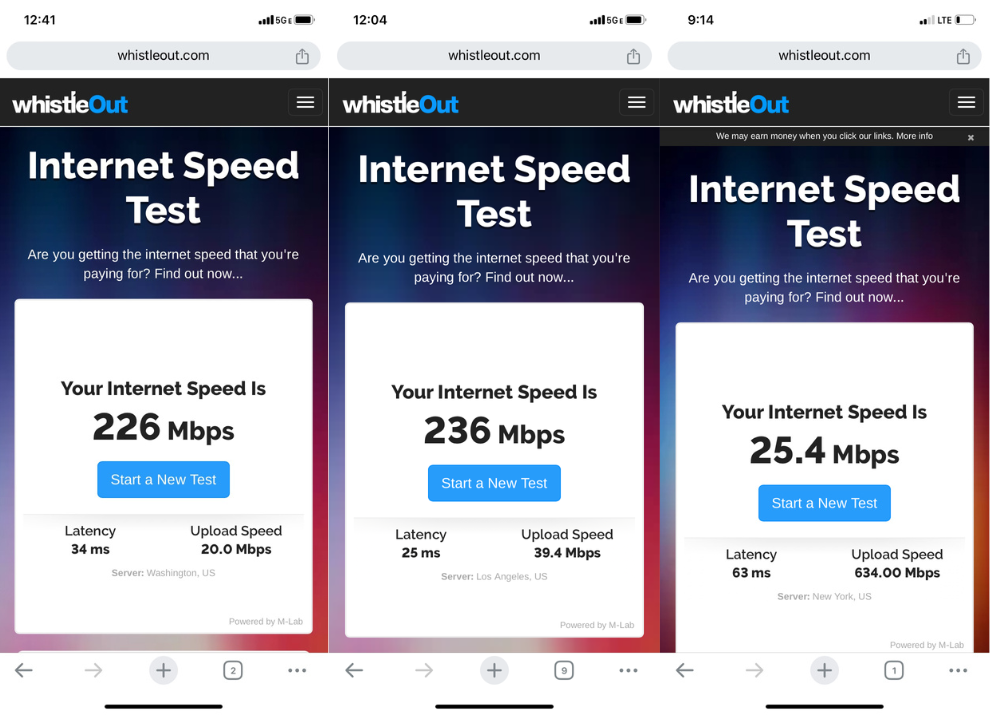
Image: Kevin Kearney
That 4G LTE speed was still fast enough to text, call, and browse without issue, but it made more data-intensive activities like streaming video more frustrating. It should be noted, too, that while Brewster is more rural than Philadelphia, it’s far from a remote area.
Score: 4 out of 5
Coverage and network reliability
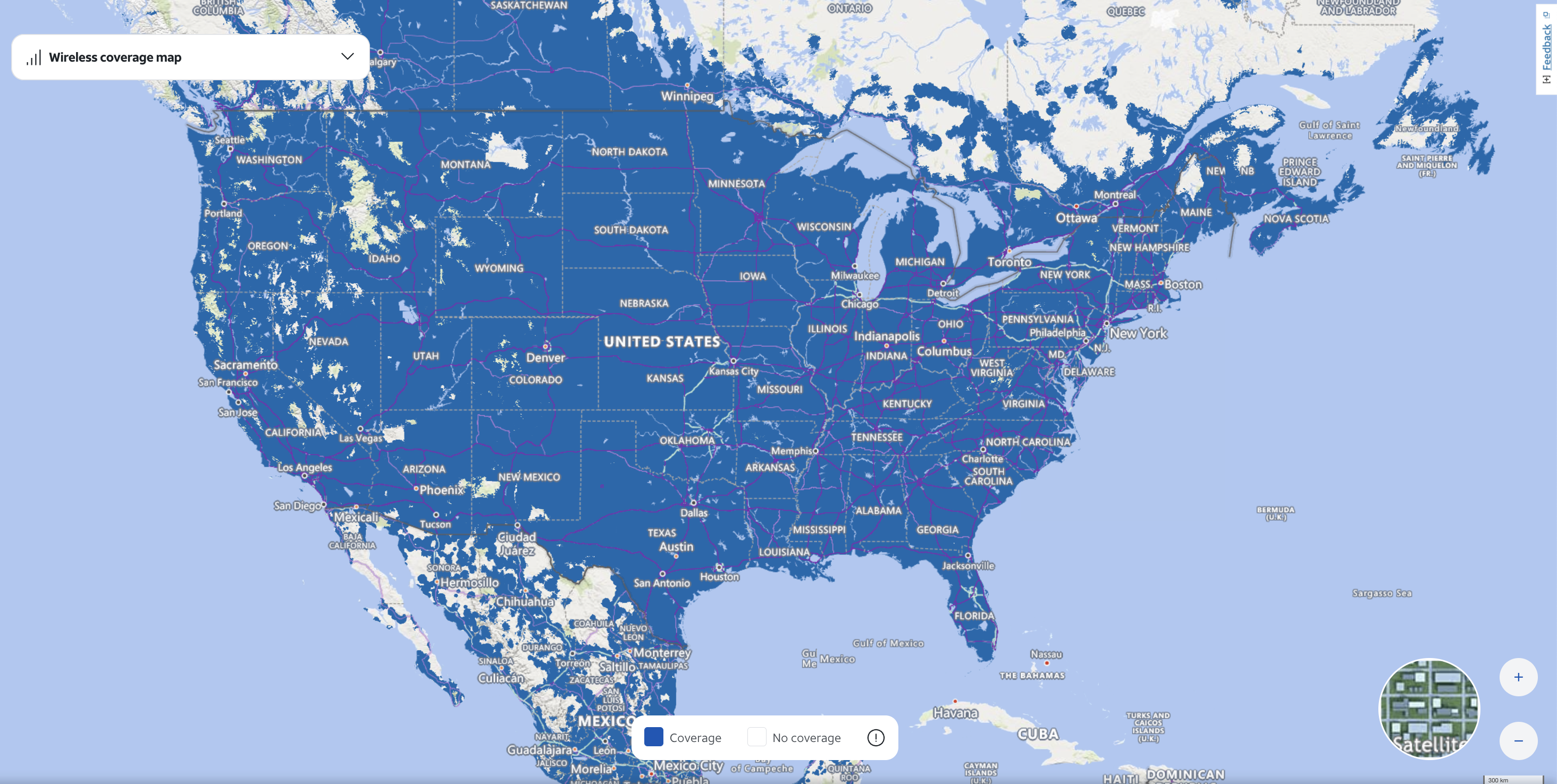
Image: AT&T
AT&T provides extensive coverage throughout the United States, with a network map covering nearly 70% of the country. Its 5G footprint is considerably smaller, covering a little less than 30% of the map, and is mostly limited to cities.
During my month-long test, I had excellent service in several cities, including Boston, Philadelphia, and San Diego. It was a different story when I ventured outside those metropolitan areas, though, with limited service at the beach in North San Diego County and spotty coverage in the woods of Cape Cod. That said, throughout my month-long testing, which took me through seven states and various areas, I was never once without service, and I always had enough bars to call, text, browse, and stream music.
Score: 4.5 out of 5
Customer service
AT&T has exceptional customer service—when they finally get around to calling you back. In my experience, I found getting to that point was a long journey. While I’ve had success on AT&T’s website’s chatbot with small tasks in the past, I wanted to see how difficult it would be to get an actual human on the phone to help me break down the specifics of my family’s monthly bill, something I knew a chatbot wouldn’t be able to help me with. In the process, I thought, they’d help me determine whether I’d be better off finding another carrier.
Frustratingly, it took me three attempts to get a real person on the line. The first time, I was told I’d need to schedule a callback, which was estimated to be about two hours away. I agreed to that and was surprised when I didn’t receive a call for the rest of the afternoon. The next morning, I woke to a missed call from AT&T, who’d finally circled back to me, albeit at two in the morning.
A few days later, I tried again. This time, I was prompted to schedule a callback again, though the only options provided were several days away, over the weekend. I decided I’d try again the following week.
Finally, I tried a third time, scheduled a callback estimated to be 30 to 50 minutes away, and was pleasantly surprised when it came 25 minutes later. The customer service representative was helpful and kind, answering all my questions about add-ons, fees, and phone financing. My big takeaway? Helpful people staff AT&T's customer service, but the system they’re working in is flawed.
Score: 2.5 out of 5
Signing up with AT&T
New customers can easily sign up for AT&T on the carrier’s website. You can choose from a range of single-line plans or build a custom family plan.
AT&T plans are available through eSIM or a physical SIM card. I’ve always used a SIM card. I’ve only upgraded devices a few times in the last several years, but the process to activate those devices was simple. I’d remove the SIM card from my older phone, insert it into the new one, and turn on the device. Within a few minutes, it’d be operating on the AT&T network.
Managing my plan
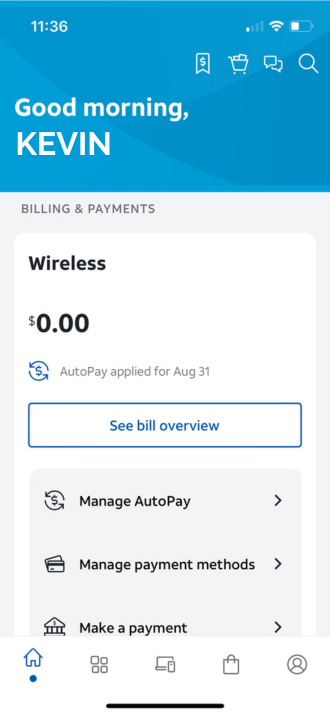
You can manage your plan on AT&T’s website or the myAT&T app. The myAT&T app is a sleeker version of its website aimed at mobile users. It lets you check your data usage, pay your bill, and purchase plan add-ons.
Considering my unlimited plan is set to autopay, I don’t often use the app. In my month of testing, though, I found digging through past bill statements and analyzing my actual data usage very helpful. The app was easy to navigate, and I appreciated being able to look at my month-to-month data usage to see whether I should be paying for an unlimited plan.
Cancelling my AT&T plan
AT&T requires customers to cancel their plans by calling customer service or using the chat agent on the AT&T website. If you financed any devices with your plan, you’ll be responsible for paying the rest of the balance.
If you cancel your plan before the end of a contract, you’ll need to pay an Early Termination Fee (ETF). You can see whether you’ll be hit with an ETF by heading to myAT&T and tapping My devices > Manage Device > Device info.
Is AT&T's entry-level plan worth it?
For the past 15 years, I have had few complaints about my AT&T plan. It wasn't until I started working remotely and relying on my mobile hotspot that I began to wonder if I was overpaying. After a month of testing and deliberation, I finally cancelled and left the family plan for good.
AT&T has since discontinued the Unlimited Starter SL. The cheapest unlimited plan you can get from AT&T now is Value 2.0, and if anything, it makes the case for leaving even stronger. Here's why.
Data allotment
AT&T's entry-level plan’s approach to unlimited data sounds great in theory. In many ways, it is. I can stream YouTube, Spotify, and even take Zoom calls on the go without worrying about exceeding a monthly cap. Yes, speeds are slowed after using 5GB of data, but if you are on Wi-Fi more often than not, this isn't a huge deal.
After studying my monthly data usage, though, I’ve realized I don’t need to pay for that much premium data. On average, I use around 12GB of data per month, a number that’s well below the premium data caps for several more affordable MVNO plans.
How much data do I need?
The amount of data you use per month is a good indicator of how much data you’ll need in a phone plan. Most people overestimate how much data they actually use and, as a result, overpay for enormous unlimited plans.
Check out our mobile data usage guide to learn how much data you really need in a phone plan.
Mobile hotspot
AT&T's entry-level plan offers 3GB of dedicated mobile hotspot per month. In the past, I only hotspotted occasionally, usually preferring to work at home or in coffee shops with free Wi-Fi. Recently, though, I’ve begun working down by the beach and need my hotspot to stay connected to Slack, Zoom, and Google Docs. AT&T’s hotspot works well, with only a few intermittent drops in service, but if you need to use a hotspot often, you'll run out of that 3GB allotment every month. Moving forward, I need a plan with a larger data allowance.
Streaming and videoconferencing
Throughout my month of testing, I wanted to see how two of my most essential apps—Spotify and Zoom—did in various settings. Whenever I had 5G, neither app had latency or connection issues, as expected. The same was true with 4G LTE, for the most part: Zoom could get glitchy when I had under three bars of service, but I could still make it through work calls without any major issues.
This gave me pause. I was starting to think I’d be leaving AT&T behind, but I wasn’t sure about leaving behind such reliable coverage. It only took me a few minutes to remember something that’s easy to forget: you can get access to the AT&T network through a more affordable MVNO. I can leave my AT&T plan and still have the same great coverage.
AT&T Wireless vs. the competition
I decided to look for plans with bigger hotspot allowances, comparable coverage, and lower prices. I could’ve looked at plans from other major carriers—T-Mobile and Verizon—but I liked the coverage on the AT&T network. I just wanted to pay less, so I began looking at AT&T MVNOs.
The plans that aligned with my needs were from US Mobile and Mint Mobile, two brands that present themselves as alternatives to bigger carriers like AT&T.
AT&T Value 2.0 SL vs. competitors
| Plan | Full-speed data | Mobile hotspot | Price | Shop this plan |
|---|---|---|---|---|
| AT&T Value 2.0 | 5GB | 3GB | $50/month |
VIEW AT AT&T |
| US Mobile Unlimited Starter plan | Unlimited | 20GB | $25/month |
VIEW AT US MOBILE |
| Pure Talk $55 Monthly Unlimited | 60GB | 20GB | $55/month |
VIEW AT PURE TALK |
After some research, the most appealing option appeared to be US Mobile’s Unlimited Starter plan. US Mobile operates on the AT&T network thanks to its TelePortal feature, which allows users to toggle between wireless networks. As we pointed out in our review of the carrier, TelePortal is not without its flaws, but it’s still a handy tool to have if you’re constantly working in various locations, as I do.
Most importantly, US Mobile’s plan offers more value than AT&T’s. US Mobile’s Unlimited Starter Plan offers nearly three times my monthly data usage and double the mobile hotspot for $25 less than AT&T’s Value 2.0. Granted, I pay less than the sticker price, thanks to the four-line discount my family plan earns, but that rebate still doesn’t bring my monthly payment below US Mobile’s price.
Still, I was worried I might regret limiting my monthly data, so I looked at a higher-data option from AT&T MVNO. Pure Talk’s $55 Monthly Unlimited plan offers 60GB of premium data and 20GB of mobile hotspot, which is a great deal, especially for someone looking to work away from Wi-Fi. I was tempted by the promise of an enormous hotspot, all but ensuring I’d be set month-to-month, but the price isn’t low enough to tempt me away from the AT&T family plan discounts.
Recap: Would I recommend AT&T?
I would not recommend AT&T to customers looking for an affordable unlimited plan with a mobile hotspot. While AT&T has solid coverage and fast speeds, they’re not worth the expensive monthly payments. Other carriers, notably US Mobile, operate on AT&T’s network and provide similar features and perks for considerably less money. It no longer makes sense to continue paying those high prices.
Kevin Kearney
Sr. Staff Writer

Find a better phone plan
Thousands of cell phone plans unpacked. All the facts. No surprises.


.png?w=280&h=280&usm=20&usmrad=0.8&fit=crop "Best Cell Phone Deals for July 2026: Get the New iPhone 17 for Free")