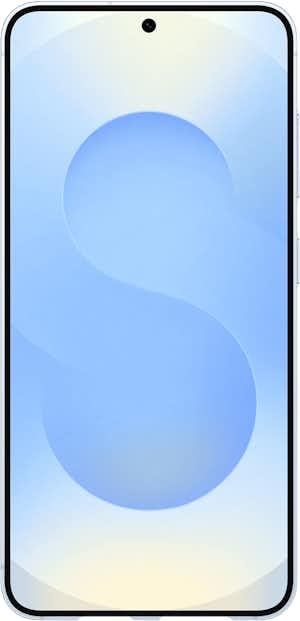
Samsung today unveiled the Galaxy S25 family, once again featuring three phones: the standard Galaxy S25, the Galaxy S25+, and the Galaxy S25 Ultra.
When it comes to hardware upgrades, not much has changed. The key improvement across all three models is a new Snapdragon 8 Elite chipset. The entire Galaxy S25 family is a little lighter, and the premium Galaxy S25 Ultra has less bezel surrounding the screen. Otherwise, we're looking at fairly similar devices to the Galaxy S24 suite.
Samsung is instead betting on new Galaxy AI features as key selling points, which include a context-aware toolbar with quick actions, AI search in settings and the camera gallery, and a call recorder. Gemini on the Galaxy S25 family is also able to handle multi-step tasks.
Pricing is largely unchanged this year, with the Galaxy S25 and Galaxy S25+ costing the same amount as what you'd pay the equivalent Galaxy S24 at launch last year. This means a minimum of $799 for the 128GB S25 or $999 for the S25+.
The Galaxy S25 Ultra has had a $50 price cut, however, and now starts at $1,299 for a 256GB model.
Here's the complete outright pricing for the Galaxy S25 range:
Before we get stuck into the nitty-gritty, here are the important details. You'll be able to pre-order all three Galaxy S25 devices from today ahead of a February 14 release date. Samsung says pre-orders will start shipping from February 6, so those who pre-order might end up getting their phones a little early.
You can pre-order the Galaxy S25 through a phone plan or purchase one outright from major retailers including Samsung, Best Buy, and Amazon. As is the norm, there are plenty of pre-order bonuses to go around.
Samsung Galaxy S25 5G 128GB Plans
|
MobileX

3GB 3-month Plan
$6.99/mo
$20.97 upfront payment for 3 months <br> (equals to $6.99/month)
+ $819.88 Upfront
|
|
Google Fi Wireless

Unlimited Essentials for 1
$35.00/mo
+ $799.99 Upfront
|
|
Cox Mobile

Gig Unlimited Plan
$45.00/mo
+ $809.99 Upfront
|
|
T-Mobile

Experience Beyond
$100.00/mo
with Auto-Pay + Taxes and fees
|
|
XFINITY Mobile

Mobile Select Plan
$0.00/mo
(for the first year of service) <br>Regular rate of $30/mo. thereafter
+ $799.99 Upfront
|
Samsung Galaxy AI

The entire Galaxy S25 family features Galaxy AI, which was first introduced with the Galaxy S24 last year. All existing Galaxy AI features are naturally available on the Galaxy S25 series. These include:
- Web page and note summaries
- Live two-way translation on phone calls with transcription
- Translation in messages
- Tone suggestions for messages (to make a message more casual or professional, for example)
- Circle to Search
- AI photo editing features
There's a plethora of new additions this year, the most notable of which is the ability for Gemini to complete multi-step tasks with one command. Samsung gave a few examples:
- Finding restaurants that meet certain criteria (both vegan and pet friendly) and then texting the list to a friend
- Adding every game of your favorite sports team to your calendar
Multi-step commands will initially work across Samsung and Google's native apps. Spotify and WhatsApp are the only third-party apps to support the feature at launch.
There's also "AI Select," which lives in the edge panel. AI Select provides context-specific actions based on what's currently on your screen. If you're watching a YouTube video, it might give you the option to take a screen or make a GIF. If you're looking at a document, you'll get translation options. Or if you're looking at an event on a website, you'll get an "Add to calendar" button.
Other new Galaxy AI features include:
- Proactive briefs at the start and end of each day, giving you information like weather, sleep data, and your calendar
- Call recording with automatic transcription
- Natural language search in the Samsung Gallery app and the Settings app
- Improvements to Circle to Search that let it identify audio playing, in addition to what's on the screen
- An audio eraser for removing unwanted noise in videos
Older Galaxy S devices are set to get some of the new Galaxy AI features later this year. Samsung says the Galaxy S25 family will run these features faster and, in some cases, may be able to run them on the device rather than relying on an internet connection for cloud-based computation.
Galaxy AI features still come with the caveat that they will be free until the end of 2025. Samsung has yet to provide further information on what they could cost down the line.
Samsung Galaxy S25 Ultra

The Galaxy S25 Ultra hardware doesn't feature many changes from last year's model. It's still built from titanium, but the build is a little curvier. The aesthetic is more in line with the standard Galaxy S25 and Galaxy S25+, compared to how boxy the Galaxy S24 Ultra is.
Samsung has increased the screen size to 6.9 inches (up from 6.8 inches) while also reducing the bezel around the display. Yet despite the larger size, the phone is 15 grams lighter and more durable. The screen is protected with Gorilla Glass Armor 2, which increases both drop and scratch protection. It also adds a next-generation anti-reflective layer.
Despite the slight redesign, the Galaxy S25 Ultra still has an integrated S Pen. Sadly, you can no longer use it to remotely trigger the camera shutter.
On the camera front, the Galaxy S25 Ultra's main upgrade is a new 50MP ultra-wide lens. This replaces the 12MP telephoto lens on the Galaxy S24 Ultra. In addition to higher resolution, Samsung says the lens is ideal for macro photography.
The other Galaxy S25 Ultra cameras are in line with what we saw on the Galaxy S24 Ultra last year: a 200MP primary lens, a 10MP 3x zoom lens, a 50MP 5x zoom lens, and a 12MP selfie camera.
Samsung is powering the Galaxy S25 Ultra with a custom version of Qualcomm's new Snapdragon 8 Elite. The company says the Snapdragon 8 Elite offers 37% faster processing than the Galaxy S24 Ultra and 30% faster graphics.
In terms of battery, there's a 5,000mAh cell inside. This is the same as what was used in the Galaxy S24 Ultra, but processor efficiencies could lead to extra longevity.
The Galaxy S25 Ultra will receive seven years of operating system and security updates, as with last year's model. This is currently the best software support promise for Android devices, matching Google's seven-year commitment for recent Pixel devices, such as the Pixel 9 family.
The Galaxy S25 Ultra is available in black, grey, "silverblue," and white. If you order directly through the Samsung website, you'll also be able to pick from "jetblack," "jadegreen," and "pinkgold" (evidently, Samsung isn't vibing with word spaces this year).
Pre-orders start today, ahead of a February 14 release date.
Samsung Galaxy S25 and Galaxy S25+

As with the Galaxy S25 Ultra, the big hardware changes with the Galaxy S25 and Galaxy S25+ are the new chipset and new ultra-wide camera.
The pair are powered by the same Snapdragon 8 Elite chipset found in the Galaxy S25 Ultra. This is a welcome change, as last year Samsung used in-house Exynos CPUs for the standard Galaxy S24 and Galaxy S24 Plus, compared to the beefier Snapdragon in the Ultra.
This is joined by a 50MP primary lens, a 10MP 3x zoom lens, and a 12MP selfie camera.
Otherwise, the Galaxy S25 and Galaxy S25+ are dead ringers for last year's models, but both are a little bit thinner. Screen sizes are the same at 6.2-inch and 6.7-inch, respectively. Battery capacity is also changed, with a 4,000mAh cell in the smaller phone and a 4,900mAh cell in the larger.
Cameras are unchanged, too, with a 50MP primary lens, 12MP ultra-wide lens, 10MP 3x zoom lens, and a 12MP selfie camera.
The Galaxy S25 and Galaxy S25+ will also get seven years of software and security updates, just like the Galaxy S25 Ultra.
You can grab both phones in a choice of silver, mint, "icyblue," and navy. If you order directly through the Samsung website, you'll also be able to pick from "blueblack," "coralred," and "pinkgold."
Pre-orders start today ahead of a February 14 release date.
Alex Choros

Find a better phone plan
Thousands of cell phone plans unpacked. All the facts. No surprises.


.png?w=280&h=280&usm=20&usmrad=0.8&fit=crop "Best Cell Phone Deals for July 2026: Get the New iPhone 17 for Free")