AT&T's 5G coverage spans a modest 29.52% of the United States. Big Blue also boasts one of the most reliable 4G LTE networks among the big three carriers (AT&T, Verizon, and T-Mobile). Although it's not the largest 5G network—that honor goes to T-Mobile—AT&T's 5G service provides a modest footprint, excellent mobile internet speeds, and is still larger the Verizon's 5G network.
Our testing shows that AT&T made great strides in bolstering its 5G reach in the past few years. Couple that with an outstanding 4G LTE network, and Big Blue provides stable signal strength in both urban and rural areas.
Check out AT&T’s 5G coverage map, see how it compares to Verizon and T-Mobile, and discover what states have the most AT&T 5G support.
AT&T 5G coverage map

Image Credit: WhistleOut
If you’ve checked AT&T’s 5G coverage area before, you’ll notice that it’s grown from covering 18.11% of the nation to a respectable 29.52%. That’s a reasonable increase. And AT&T is the only mobile provider with coverage in every state—even Vermont with .18% state-wide coverage and parts of Alaska.
Reaching over 205 million people, AT&T’s 5G network meets the FCC’s “nationwide” status criteria. Generally, you’ll find better 5G signal strength in the northeastern part of the US, parts of the South, and California. The midwestern part of the country is a bit sparse in spots where it relies on low-band 5G technology, although AT&T’s 5G expansion continues to improve.
To see if AT&T's 5G network is available in your area, tap Click to Activate below and zoom into your neighborhood. You can toggle between 4G and 5G networks and switch between AT&T, Verizon, and T-Mobile.
AT&T 5G coverage analysis
| Carrier | |
|---|---|
| AT&T | |
| T-Mobile | |
| Verizon |
While Verizon claims the widest 4G LTE service area, T-Mobile claims the broadest 5G footprint. That puts AT&T in second place for both 5G and 4G LTE network coverage. However, AT&T’s approach offers many benefits, particularly with 5G.
Although AT&T got a late start turning on its low-band 5G spectrum in July 2020, Big Blue now offers a balanced 5G network that utilizes a mix of mmWave, mid-band, and low-band spectrums. Therefore, AT&T delivers the best of both worlds with a wider 5G coverage area than Verizon and faster speeds than T-Mobile.
How do I know if there are 5G towers near me?
- First, zoom in on the 5G coverage maps for each carrier above... you should get a good idea of whether you have 5G towers near you based on your neighborhood's saturated 5G coverage.
- Then, check your carrier's website to see if they offer a location-based breakdown of which towers they utilize for their 5G signal.
- You can also look at third-party apps like OpenSignal or Cellmapper.net, which use crowdsourced databases to pinpoint 5G towers near you.
AT&T 5G vs. the competition
Now that you know more about AT&T’s 5G service, let’s take a deeper look at how it stacks up against the competition.
AT&T vs. Verizon 5G coverage
Verizon and AT&T have nearly identical 4G LTE coverage with 68% and 71% country-wide coverage, respectively. But AT&T reaches considerably more of the nation with 5G than Verizon, spanning 29% of the United States versus Verizon’s 12%. With its mix of high-, mid-, and low-band 5G frequencies, AT&T’s 5G offers a balance between mobile internet speed and reach. On the other hand, Verizon’s mmWave 5G is blazingly fast—if it’s available in your area.
AT&T vs. T-Mobile 5G coverage
T-Mobile’s strategy has been simple: blanket the US in 5G. Indeed, The Un-Carrier boasts the furthest reaching 5G network with a whopping 53% nationwide coverage. However, its network speeds are a bit lackluster. Since T-Mobile rolled out mostly low-band 5G, prioritizing long-range signals over data speeds, its 5G network is marginally faster than 4G LTE. AT&T’s growing coverage offers better speeds at the expense of accessibility, while T-Mobile’s largely low- and mid-band 5G is widely available.
How fast is AT&T's 5G coverage?
AT&T’s 5G coverage delivers a mix of reach and speed. Its high-band 5G boasts theoretical speeds of up to 2.5Gbps. In our testing, we saw 64Mbps download and 26Mbps upload speeds in Los Angeles, California. Compare that to T-Mobile’s 61Mbps down and 30Mbps up. However, spanning just shy of 30% of the country, AT&T’s 5G service has room for improvement. The good news: AT&T’s 5G is plenty fast where it's available.
Best states for AT&T 5G coverage
AT&T’s 5G network touches all 50 states and reaches over 250 million people in the country. However, some areas have better 5G connectivity than others. Here are the states with the best AT&T 5G signal strength:
- Delaware - 82.65%
- New Jersey - 80.22%
- Maryland - 78.16%
- Rhode Island - 75.36%
- Ohio - 70.59%
Best cities for AT&T 5G coverage
AT&T is the only mobile provider with 5G coverage in every state, but certain cities have better coverage than others. Here are the top ten cities with 100% AT&T 5G coverage:
- Milwaukee, WI
- Madison, WI
- Billings, MT
- Helena, MT
- Missoula, MT
- Topeka, KS
- Andover, KS
- Bently, KS
- Colwich, KS
- Greenwich, KS
These are the cities with the most 5G by population density, thereby delivering 5G to tons of phones:
- Overland Parks, KS - 99.98%
- Modesto, CA - 99.98%
- Glendale, CA - 99.94%
- Ontario, CA - 99.93%
- North Las Vegas, NV - 99.86%
- Fort Wayne, IN - 99.86%
- Santa Ana, CA - 99.81%
- Fresno, CA - 99.75%
- Columbus, OH, 99.75%
Best AT&T plans
If you want the best experience with AT&T's 5G network, you're going to have to get one of AT&T's postpaid unlimited plans. The low-tier option is the Value 2.0 plan costing $50/month. This plan includes 5GB of high-speed data, a 3GB mobile hotspot, and standard-definition video streaming. After you use all 5GB of premium data, your data will slow down for the rest of the month.
The Extra 2.0 plan is AT&T's mid-tier option costing $70/month. It includes 100GB of premium data, a 50GB mobile hotspot, and standard definition streaming. Premium data receives the highest priority on a mobile network, so it generally doesn't slow down. If you exceed the 100GB allotment, you'll still have unlimited data, but your speeds can be deprioritizatized like the Value 2.0 plan.
AT&T's best plan is the Premium 2.0 plan. As the name implies, this plan includes unlimited premium data, so you have unlimited access to the fastest 5G speeds AT&T can offer. Plus, there are extra perks like a 100GB mobile hotspot and 4K ultra-high-definition streaming. Those special features don't come cheap, however, and the Premium 2.0 plan starts at $90/month.
|
#1
|
AT&T

Value 2.0℠
$50.00/mo
+ $35 Upfront
|
|
#2
|
AT&T
Extra 2.0℠
$70.00/mo
+ $35 Upfront
|
|
#3
|
AT&T
Premium 2.0℠
$90.00/mo
+ $35 Upfront
|
MVNOs on AT&T's 5G network
If you don't want to pay the expensive AT&T plan prices, you should consider getting a plan from an MVNO that uses AT&T's 5G network. MVNOs are smaller carriers that offer discounted access to the big carrier networks. These carrier's plans might be subject to deprioritization at times and have smaller premium data caps, but they're typically much cheaper than the big carrier plans. There are many AT&T MVNOs, but we highlighted a couple of our favorites below.
Cricket Wireless
Cricket Wireless is a smaller carrier that is owned directly by AT&T. It offers four different plans, including three unlimited plans with access to AT&T's 5G network. It's mid-tier Smart Unlimited plan costs $45/month with autopay and includes unlimited data and a 15GB mobile hotspot. It doesn't include premium data so the speeds can be reduced during times of network congestion. Cricket's better option is the Supreme Unlimited plan for $55/month with autopay. It includes unlimited premium data, a 50GB mobile hotspot, and HBO Max with ads. It actually includes the same data features and a larger mobile hotspot than the slightly more expensive AT&T Intro plan! Check out all of Cricket's unlimited plans:
|
#1
|
Cricket

3-Month Unlimited Plan
$15.00/mo
$45 advance payment for 3 months (equals to $15/month)<br>regular rate for 3 months is $120 (equals to $40/month)
+ $9.99 Upfront
|
|
#2
|
Cricket
Select Unlimited Plan
$35.00/mo
with AutoPay; $40 for the first month.
+ $9.99 Upfront
|
|
#3
|
Cricket
Smart Unlimited Plan
$45.00/mo
with AutoPay; $50 for the first month.
+ $9.99 Upfront
|
|
#4
|
Cricket
Supreme Unlimited Plan
$55.00/mo
with AutoPay; $60 for the first month.
+ $9.99 Upfront
|
|
#5
|
Cricket
12-Month Unlimited Plan
$300.00
$300 advance payment for 12 months (equals to $25/month).
+ $9.99 Upfront
|
How to get a better 5G signal with AT&T
Getting 5G access with AT&T is pretty simple. You’ll merely need a 5G phone, a plan that supports 5G, and a 5G signal. While you can’t control the location of AT&T’s towers, you can get better signal strength by upgrading your phone. Generally, a newer phone includes more bands that let you tap into 5G in more places.
You can snag an unlocked phone to bring your own device (BYOD) to an AT&T plan or purchase a handset from the carrier. We recommend a flagship phone such as the iPhone 13 series, a recent Google Pixel, or Samsung Galaxy device, but most current 5G phones will work just fine.
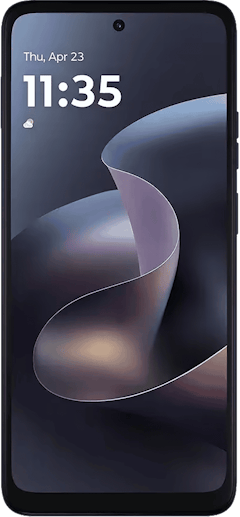
Moto G 5G (2026) 128GB
- 6.7 inch display
- Rear Cameras: 50MP, 2MP
- Front Camera: 32MP
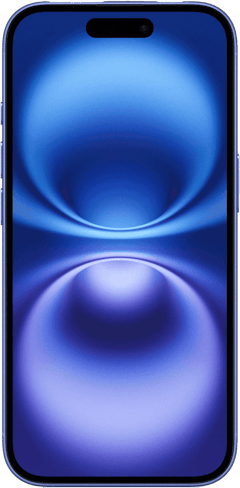
iPhone 16 128GB
- 6.1 inch display
- Rear Cameras: 48MP, 12MP
- Front Camera: 12MP
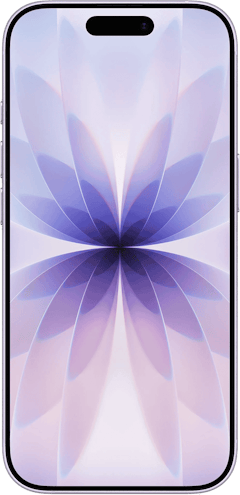
iPhone 17 256GB
- 6.3 inch display
- Rear Cameras: 48MP, 48MP
- Front Camera: 18MP
iPhone Air 256GB
- 6.5 inch display
- Rear Camera: 48MP
- Front Camera: 18MP

iPhone 17 512GB
- 6.3 inch display
- Rear Cameras: 48MP, 48MP
- Front Camera: 18MP

AT&T 5G coverage: FAQs
AT&T offers respectable nationwide 5G coverage spanning 29.52% of the United States. Here are the states with the best AT&T 5G signal strength:
- Delaware - 82.65%
- New Jersey - 80.22%
- Maryland - 78.16%
- Rhode Island - 75.36%
- Ohio - 70.59%
The top cities for AT&T 5G connectivity include:
- Milwaukee, WI
- Madison, WI
- Billings, MT
- Helena, MT
- Missoula, MT
- Topeka, KS
- Andover, KS
- Bently, KS
- Colwich, KS
- Greenwich, KS
Moe Long
Senior Writer

Find a better phone plan
Thousands of cell phone plans unpacked. All the facts. No surprises.


.png?w=280&h=280&usm=20&usmrad=0.8&fit=crop "Best Cell Phone Deals for July 2026: Get the New iPhone 17 for Free")