LTE stands for Long Term Evolution. It's a specific type of 4G service that delivers a fast mobile internet experience. Using 4G LTE enables services like mobile internet for app use and web browsing.
You’ve probably noticed an LTE symbol and wondered, “What does LTE mean on my phone?” Learn all there is to know about 4G LTE, from what it is to potential data speeds and everything in between.
What Does LTE Mean?
LTE means "Long Term Evolution." It's a wireless data transmission standard that's faster than 3G but slower than 5G. Using LTE enables internet-connected apps and services to function on your device. It’s a mobile connection that helps you stream House of the Dragon on HBO Max, play Fortnite on the go, or chat with friends using WhatsApp. 4G LTE has a theoretical maximum download speed of around 150Mbps, but typically you'll see around 20Mbps-50Mbps download speeds.
Is 4G the same as LTE?
Often, Long Term Evolution appears as 4G LTE. They aren’t the same, but LTE rose to prominence with 4G, which was the fourth generation of cellular networks. A 4G network provides data transmission rates of 1Gbps when stationary and 100Mbps while moving, according to the ITU Radiocommunications Sector (ITU-R). But for marketing purposes, the ITU-R allowed mobile carriers to refer to LTE as 4G.
Why is LTE showing on my phone?
The LTE icon on the status bar of your phone indicates your data services are turned on and you're connected to a 4G network. Sometimes, you’ll notice symbols like 4G+, LTE+, or LTE-A signifying an LTE Advanced or LTE Advanced Pro network signal. These are all part of the 4G coverage ecosystem of various wireless carriers. You can see these symbols both on iPhones and Android devices like Samsungs or Pixels.
LTE Advanced and its Pro sibling are enhanced versions of LTE, which deliver even faster mobile data speeds. LTE Advanced features a theoretical 1Gbps download capacity, while Advanced Pro goes as high as 3Gbps. Accordingly, LTE Advanced and LTE Advanced Pro both fit the criteria for true 4G.
How fast is 4G LTE?
4G LTE is typically ranges between 20-50Mbps on average, with a 150Mbps theroretical maximum download speed. For upload speeds, you'll often see 2-5Mbps on a 4G LTE connection.
Which is better: LTE or 5G?
5G is better because it gives faster data speeds and supports more devices than LTE. If 4G LTE is the fourth generation of mobile wireless networking, 5G is—you guessed it—the fifth generation. That said, 4G LTE signals can travel farther than 5G signals, so LTE still offers the best coverage.
5G vs. 4G LTE speed analysis: Is LTE better than 5G?
Looking at the major network types, while 4G is faster than 3G, 5G is even better. With a high-band signal, 5G achieves up to 2.5Gbps mobile download speeds. For comparison, a 3GB high-definition video takes as little as 8 seconds to download over 5G at 3Gbps. In comparison, a 4G LTE 100Mbps download lasts up to four minutes. 5G is noticeably faster than 4G LTE, although true 4G speeds come closer to 5G capabilities.
So, ultimately, LTE is not better than 5G. However, there are various implementations of 5G. For example, low-band 5G broadcasts in the 600-700MHz range, and offers a wide coverage area with slower speeds of around 50Mbps. Mid-band 5G transmits on the 1.7GHz to 2.5GHz networks, balancing coverage area with speed and clocks anywhere from 100-900Mbps. As you can see, low-band 5G isn't that much better than 4G LTE insofar as download speed, while mid- to high-band 5G is significantly improved.
4G LTE vs. 5G download speed comparison:
- 4G LTE: 20-50Mbps
- Low-band 5G: 50-100Mbps
- Mid-band 5G: 100-900Mbps
- High-band 5G: 1.6Gbps-20Gbps
4G LTE vs. 5G coverage comparison
Where 4G LTE shines is its sheer coverage. Verizon, AT&T, and T-Mobile offer solid 4G LTE signals throughout the country. While T-Mobile blanketed the nation in 5G—mostly low- and mid-band—AT&T and Verizon continue their rollout.
Despite the clear advantages of 5G with high-speed, low-latency signals, 4G LTE maintains a significantly larger footprint. Luckily, that continues evolving as the major mobile carriers bolster their 5G coverage.
Best 5G Phones
Because 5G phones are backward compatible with 4G LTE networks, we recommend snagging a future-proofed phone, even if 5G isn’t great in your area. Our favorite 5G-capable phones include the Samsung Galaxy S23 Ultra, Google Pixel 7 Pro, and iPhone 15 Pro Max. For a wallet- and palm-friendly experience, try the iPhone SE 3rd gen (2022).
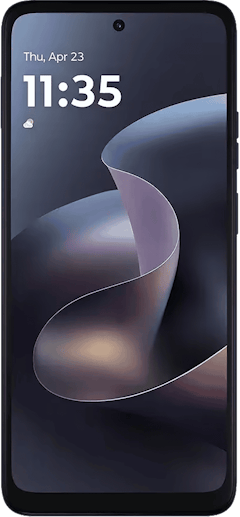
Moto G 5G (2026) 128GB
- 6.7 inch display
- Rear Cameras: 50MP, 2MP
- Front Camera: 32MP
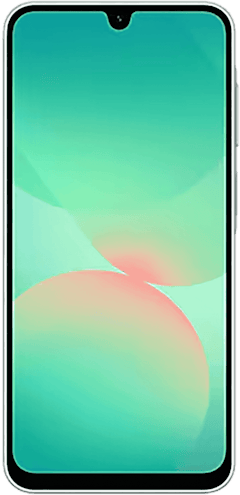
Galaxy A26 5G
- 6.7 inch display
- Rear Cameras: 50MP, 8MP, 2MP
- Front Camera: 13MP
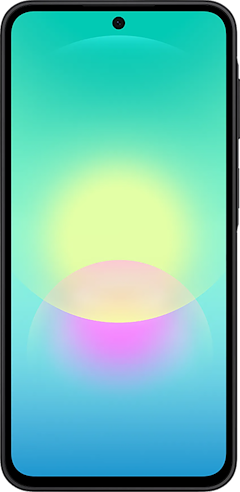
Galaxy A27 5G 128GB
- 6.7 inch display
- Rear Cameras: 50MP, 5MP, 2MP
- Front Camera: 12MP
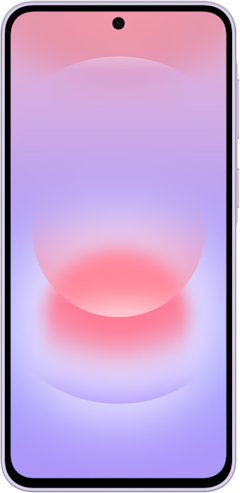
Galaxy A37 5G 128GB
- 6.7 inch display
- Rear Cameras: 50MP, 8MP, 5MP
- Front Camera: 12MP
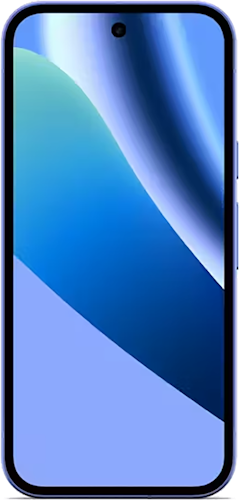
Pixel 10a 128GB
- 6.3 inch display
- Rear Cameras: 48MP, 13MP
- Front Camera: 13MP

Moe Long
Senior Writer

Find a better phone plan
Thousands of cell phone plans unpacked. All the facts. No surprises.


.png?w=280&h=280&usm=20&usmrad=0.8&fit=crop "Best Cell Phone Deals for July 2026: Get the New iPhone 17 for Free")